UPI vs Bank Transfer vs Crypto: Which Is Better for Indian Users?
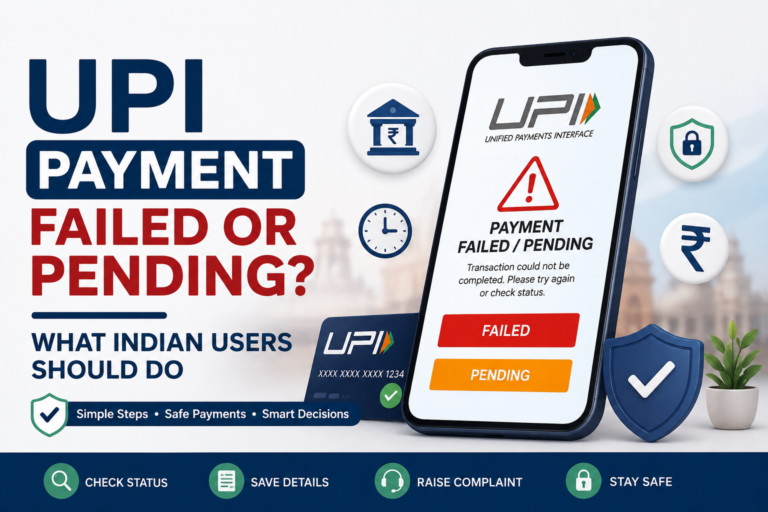
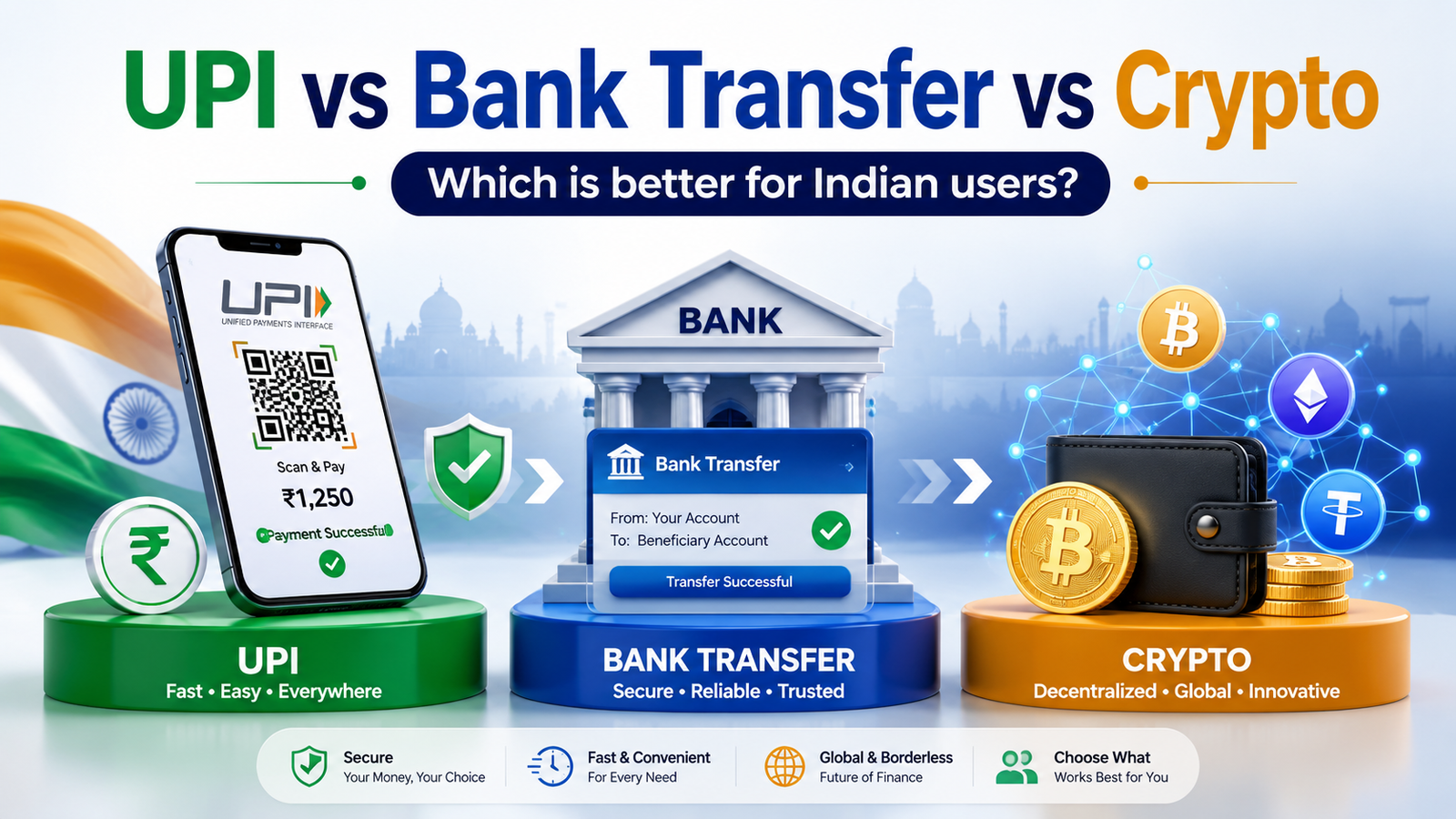
UPI vs bank transfer vs crypto is a common question for Indian users who want to send or receive money online. UPI is widely used for everyday payments, bank transfers remain familiar and reliable, while crypto payments may be useful in certain international situations.
However, the fastest option is not always the best option.
Before choosing a payment method, users should understand its speed, fees, convenience, and possible risks. This simple comparison explains the main differences between UPI, bank transfers, and crypto payments.
For a broader safety overview, read our guide to safe digital payment methods for Indian users.
What Is UPI?
Unified Payments Interface, commonly known as UPI, allows users to transfer money directly between bank accounts through a mobile application.
Instead of entering a full bank account number each time, users can often pay with a UPI ID, mobile number, or QR code. UPI operates throughout the day and allows real-time bank-to-bank payments.
For many Indian users, UPI is convenient for:
- paying local merchants;
- sending money to friends or family;
- paying bills;
- making small everyday transactions.
The main advantage is convenience. A user can usually complete a payment using a smartphone and UPI PIN.
However, convenience can also make people act too quickly. Users should always check the recipient’s name and payment amount before approving a transaction.
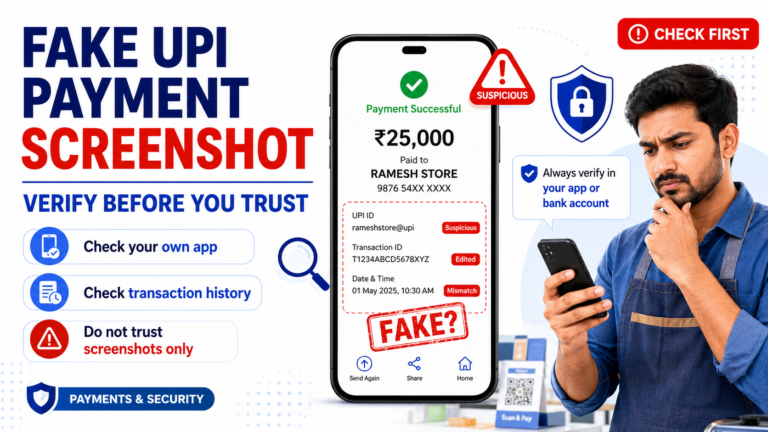
A genuine payment does not require the sender to share an OTP, password, card PIN, or UPI PIN with another person. RBI has repeatedly advised users not to share sensitive banking credentials such as PINs, passwords, and OTPs.
What Is a Bank Transfer?
“Bank transfer” is a general term that can include several payment systems in India, such as IMPS, NEFT, and RTGS.
They do not all work in exactly the same way.
IMPS
Immediate Payment Service, or IMPS, provides instant interbank transfers and is available 24 hours a day. It can be accessed through services such as mobile banking and internet banking.
NEFT
National Electronic Funds Transfer, or NEFT, is operated by the Reserve Bank of India. It is available throughout the year, but transactions are processed in half-hourly batches rather than individually in real time.
RTGS
Real Time Gross Settlement, or RTGS, processes payments individually in real time. It is available 24/7 and is generally intended for higher-value transfers. RBI specifies a minimum RTGS transfer amount of ₹2 lakh.
Bank transfers can be useful when:
- the recipient provides bank account details;
- a user needs to transfer a larger amount;
- UPI is unavailable;
- a transaction requires formal bank records.
The sender normally needs to check the beneficiary’s name, account number, bank, and IFSC code carefully. An incorrect account number may send the money to the wrong recipient.
What Is a Crypto Payment?
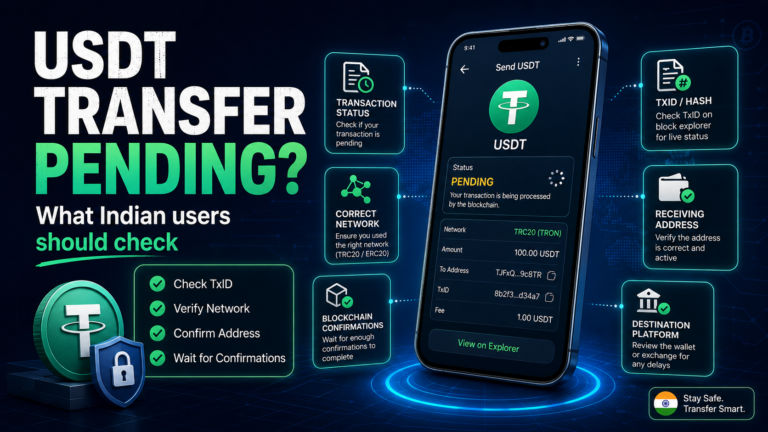
A crypto payment sends a digital asset from one wallet address to another through a blockchain network.
Unlike UPI and regular bank transfers, a crypto payment may not require both users to have Indian bank accounts. This can make it useful in some international situations.
However, crypto payments require more technical understanding.
Before sending, a user may need to verify:
- the digital asset;
- the recipient’s wallet address;
- the blockchain network;
- the network fee;
- the minimum transfer amount.
Some assets, including stablecoins, are available on multiple blockchain networks. That means selecting the correct asset alone is not enough—the sender and receiver must also use a compatible network. Tether, for example, officially supports its tokens across multiple blockchain protocols.
Blockchain transactions are generally final after confirmation. A wrong address or unsupported network can therefore be difficult or impossible to correct.
Crypto is not the easiest option for beginners. Users should understand wallets, networks, fees, and security before sending funds.
Which Method Is Faster?
UPI and IMPS are designed for instant payments, making them convenient for many domestic transactions.
RTGS also processes transfers in real time, while NEFT uses half-hourly settlement batches. Bank or application maintenance, security checks, recipient details, and technical problems can still affect the user’s experience.
Crypto speed depends on:
- the selected blockchain;
- network traffic;
- wallet or exchange processing;
- the number of confirmations required;
- the transaction fee.
A crypto transfer may sometimes appear quickly on the blockchain but remain pending inside an exchange until enough confirmations are received.
For this reason, no payment method should be described as “always instant.”
Comparing Fees
UPI payments are often convenient for normal domestic transfers, but users should still check the conditions shown by their bank or payment application.
Bank-transfer charges can depend on the bank, transfer method, account type, amount, and whether the transaction is performed online or at a branch.
Crypto costs may include:
- an exchange withdrawal fee;
- a blockchain network fee;
- a conversion fee;
- a difference between buying and selling prices.
A cheap network is not automatically the safest choice. Compatibility with the receiving wallet is more important than saving a small fee.
Always review the final amount and fee before confirming a payment.
Which Method Is Easier?
For most everyday payments within India, UPI is usually the easiest option because it is designed for quick mobile bank-to-bank payments.
Bank transfers may be more suitable when a recipient provides formal bank details or when the amount and purpose require a traditional banking record.
Crypto may be considered by users who already understand digital wallets and need to transfer supported digital assets. It should not be selected only because someone promises a faster payment or asks the user to avoid normal checks.
A payment method is easy only when the user understands how it works.
Safety Checklist Before Sending Money
Before completing any digital payment:
- confirm the recipient’s identity;
- check the amount carefully;
- review the account number, UPI ID, or wallet address;
- confirm the blockchain network when using crypto;
- never share an OTP, password, UPI PIN, seed phrase, or private key;
- avoid unknown links and unofficial support accounts;
- save the transaction ID or receipt;
- start with a small test transfer when using an unfamiliar crypto address.
Do not approve a payment because someone is creating urgency. Take a moment to verify every detail.
UPI vs Bank Transfer vs Crypto: Which Should You Choose?
There is no single payment method that is best for every user.
Choose UPI when you need a familiar and convenient domestic payment method.
Choose a bank transfer when you need to send money directly to a bank account, maintain formal transaction records, or use a system such as IMPS, NEFT, or RTGS.
Consider crypto only when both parties support the same asset and network and you understand the wallet, fees, and risks involved.
The best payment method is not simply the fastest one. It is the method you understand, can verify, and can use safely.
Before You Make a Payment
UPI, bank transfers, and crypto payments each work differently. Understanding these differences can help users avoid delays, unexpected fees, and costly mistakes.
Rupzio Guide shares simple information to help Indian users understand digital payments and make safer online decisions.
Before sending money, slow down, verify the details, and never share private security information.