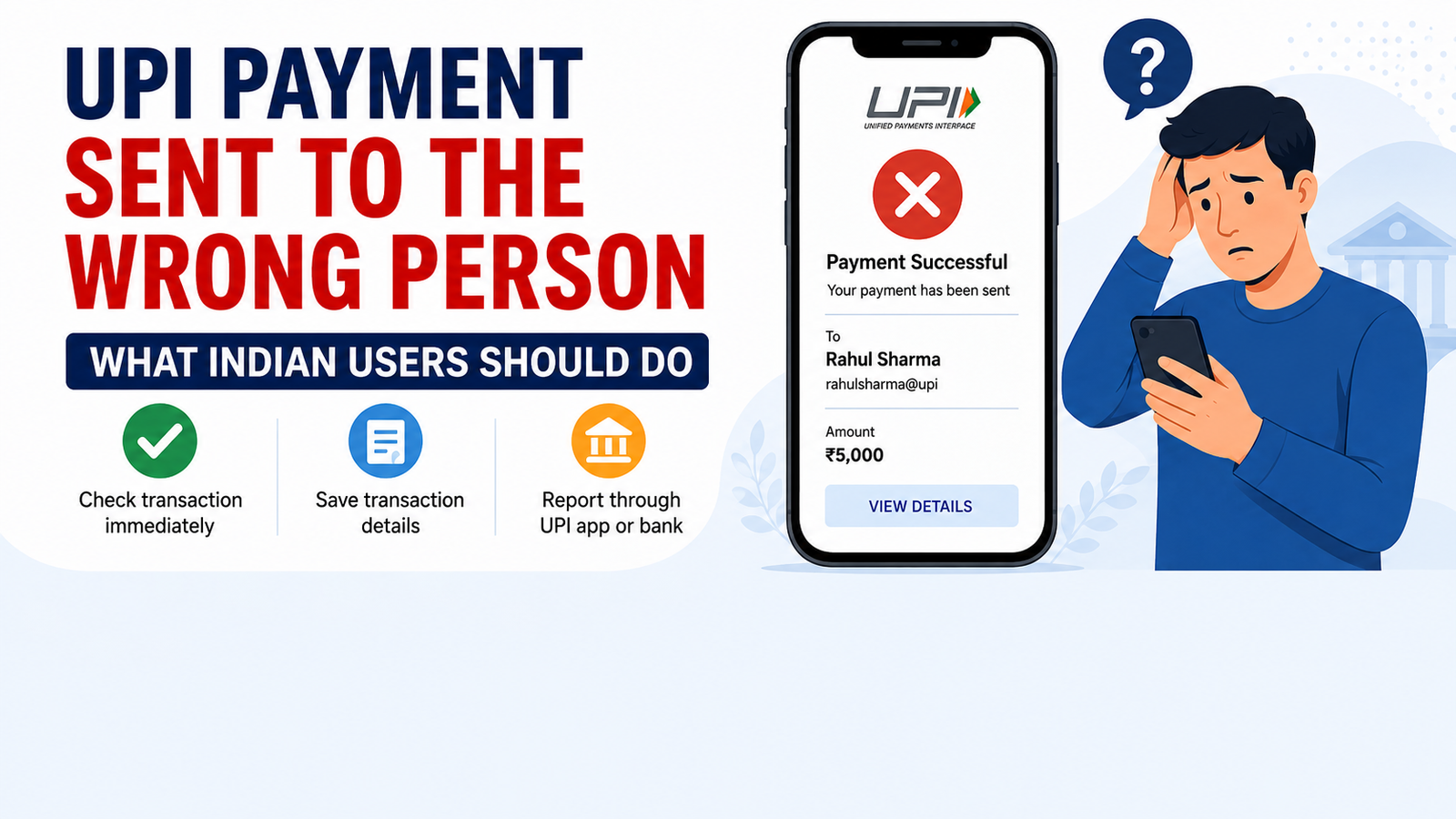
UPI Payment Sent to the Wrong Person: What Indian Users Should Do
A UPI payment sent to the wrong person can be worrying, especially when the amount is large or the receiver is someone you do not know.
This can happen when you select the wrong contact, enter an incorrect UPI ID, scan the wrong QR code, or approve the payment without checking the receiver’s name carefully.
The most important thing is to act quickly, keep the transaction details, and use only official support channels. However, you should also understand that recovering the money may not always be immediate or guaranteed.
First, Check the Transaction Status
Open the UPI app you used and check the transaction history.
Confirm whether the payment status shows:
- successful;
- pending;
- failed;
- reversed.
A wrong payment is different from a failed or pending transaction.
If the payment is still pending, do not assume that the receiver has already received the money. Wait for the final status and follow the guidance shown by your bank or UPI app.
If the payment shows successful, check the receiver’s displayed name, UPI ID, amount, date, and transaction reference carefully.
Save All Transaction Details
Do not delete the payment notification or transaction history.
Save the following information:
- transaction date and time;
- amount sent;
- receiver’s displayed name;
- receiver’s UPI ID;
- UPI transaction ID;
- UTR or reference number;
- screenshot of the transaction;
- name of the UPI app;
- name of your bank.
These details will help your bank or payment app locate the transaction.
Do not post the full transaction screenshot publicly. It may contain information that should remain private.
Report the Payment Through Your UPI App
Open the transaction inside your UPI app and look for an option such as:
- Help;
- Support;
- Report an issue;
- Raise a complaint;
- Wrong transaction;
- Money sent to the wrong person.
The wording may vary from one app to another.
Explain clearly that you completed the transaction yourself but accidentally sent it to the wrong UPI ID or receiver.
NPCI provides UPI Help for checking transaction status and raising complaints about UPI-related issues. However, users should normally begin with the app and bank involved in the transaction.
After submitting the complaint, save the complaint or ticket number.
Contact Your Bank Immediately
Contact the bank account from which the payment was made.
Use only:
- the bank’s official mobile app;
- the official customer-care number;
- the bank’s official website;
- a nearby bank branch.
Give the bank the UTR, transaction ID, amount, date, and receiver details. Ask the bank to register a complaint and explain the available recovery process.
Request a complaint number or written acknowledgement. This will help you follow up later.
The bank may attempt to trace the payment or contact the receiving bank. However, a successful transaction may not simply be cancelled like an online shopping order. Recovery can depend on the circumstances, the receiving bank’s process, and the receiver’s cooperation.
Do not trust anyone who promises a guaranteed instant reversal.
Should You Contact the Receiver?
Sometimes the UPI app may show a mobile number or enough information to identify the receiver.
You may politely explain that the money was sent by mistake and ask the person to check their account. Keep the conversation calm and save any relevant messages.
Do not:
- threaten or harass the receiver;
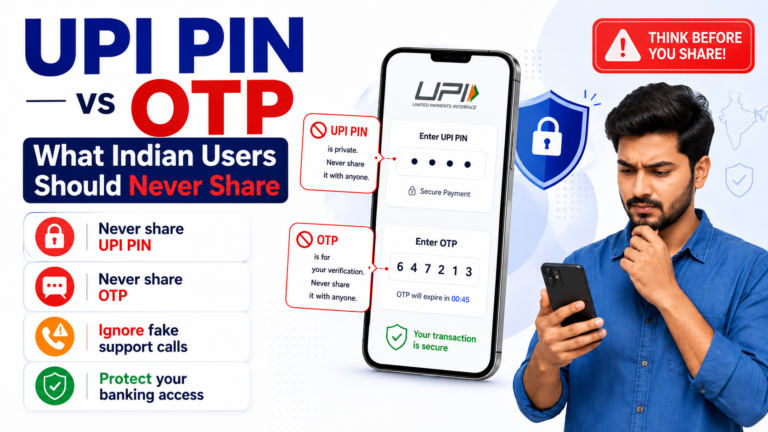
- share your bank password or OTP;
- share your UPI PIN;
- send another payment as a “verification”;
- pay a fee to get the money returned;
- install a screen-sharing app.
It is usually safer to keep your bank informed rather than trying to manage the entire recovery privately.
If the receiver asks for sensitive information, stop communicating and report the situation to your bank.
Wrong Transfer or Fraud: Understand the Difference
A genuine wrong transfer happens when you accidentally send money to an unintended person.
Fraud is different. It may involve:
- a fake seller;
- a false customer-support agent;
- a misleading QR code;
- an unknown collect request;
- someone pressuring you to approve a payment;
- a scammer pretending that you will receive a refund.
If you were tricked into making the payment, report it as suspected financial fraud immediately.
India’s National Cyber Crime Reporting Portal advises victims of financial cyber fraud to call 1930 or report the incident through the official cybercrime portal. Quick reporting can be important in fraud cases.
Also inform your bank and UPI app without delay.
Be Careful of Fake Recovery Agents
After searching online for help, you may find fake customer-care numbers, social media accounts, or people claiming they can recover your money.
They may ask you to:
- share an OTP;
- enter your UPI PIN;
- scan a QR code;
- approve a collect request;
- install remote-access software;
- pay a processing fee;
- share card or bank login details.
Do not follow these instructions.
Entering a UPI PIN normally authorises a payment from your account. It is not required simply to receive money.
Use only customer-support details listed in the official app, official bank website, or official documents.
What If the Receiver Refuses to Return the Money?
Inform your bank and keep the complaint active.
Provide any messages or evidence showing that you informed the receiver about the mistake. Do not take aggressive action or share the person’s information publicly.
Your bank may guide you on the next available complaint or legal process based on the facts of the case.
For a significant amount or a continuing dispute, you may need advice from the bank or an appropriate legal authority. Rupzio Guide cannot decide whether a particular case requires legal action.
Escalate the Complaint When Necessary
First give your bank or payment provider an opportunity to investigate the complaint.
Keep records of:
- the original complaint;
- follow-up emails or messages;
- complaint numbers;
- dates of communication;
- responses received.
If the regulated entity does not reply within 30 days, or if you are not satisfied with its response, you may be able to approach the RBI Ombudsman under the Reserve Bank–Integrated Ombudsman Scheme, 2021.
Complaints can be submitted through RBI’s Complaint Management System, and filing a complaint is free.
The Ombudsman process does not guarantee that every mistaken payment will be refunded. It provides a formal channel for complaints about how a regulated entity handled the matter.
How to Avoid Sending UPI Money to the Wrong Person
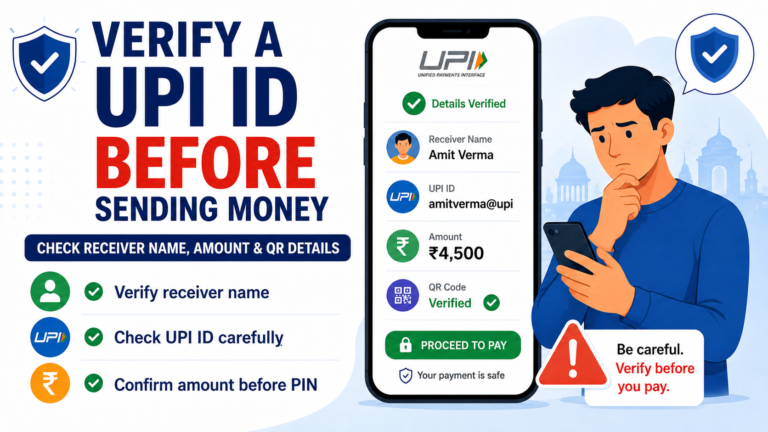
Before approving a payment:
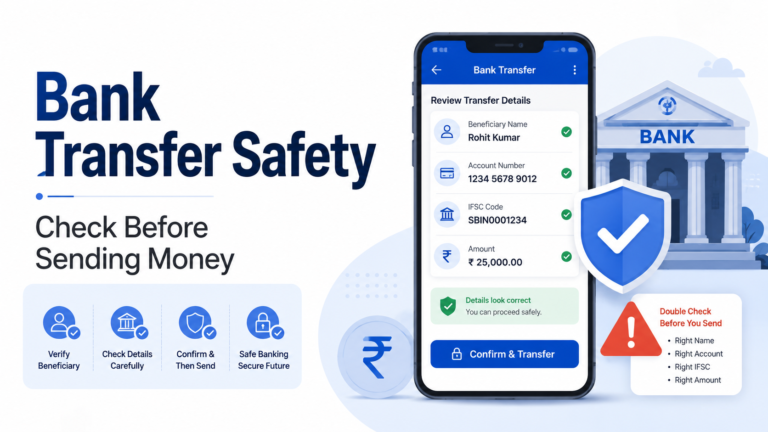
- check the receiver’s displayed name;
- confirm the full UPI ID;
- verify the mobile number;
- check the amount carefully;
- ask the receiver to confirm their details;
- avoid paying while distracted or under pressure;
- send a small test amount when paying an unfamiliar person;
- verify the merchant before scanning a QR code.
Do not rely only on a profile photo or contact name. A saved contact may have changed their mobile number or linked bank account.
Pause for a few seconds before entering your UPI PIN.
Simple Action Checklist
When a UPI payment is sent to the wrong person:
- Check whether the transaction is successful, pending, or failed.
- Save the transaction ID, UTR, screenshot, and receiver details.
- Report the transaction through the UPI app.
- Contact your bank using an official channel.
- Save the complaint number.
- Contact the receiver politely only when appropriate.
- Never share your OTP, password, or UPI PIN.
- Report suspected fraud immediately through your bank and 1930.
- Escalate an unresolved service complaint through the appropriate official process.
What to Remember After a Wrong UPI Transfer
A wrong UPI transfer should be reported as quickly as possible, but you should remain calm and avoid fake recovery services.
Keep proper records, contact your UPI app and bank, and follow the official complaint process. Do not make another payment or share security information because someone promises to return your money.
For transaction delays, read our guide about UPI payments that fail or remain pending.
You can also read our guide to safe digital payment methods for Indian users before making your next online payment.
Rupzio Guide provides simple educational information to help Indian users understand digital payments and make safer online decisions.