UPI Scam Warning: Common Tricks Indian Users Should Know
A UPI scam warning is worth paying attention to because many digital payment scams do not depend on breaking into a bank account. Instead, fraudsters often try to convince users to approve a payment, share private information, scan a QR code, or install an unsafe app.
UPI itself includes security features such as authentication and a UPI PIN. The bigger risk often comes from social engineering — when someone creates fear, urgency, confusion, or the promise of a reward to make you act quickly.
Understanding the most common tricks can help you stop before approving a suspicious transaction.
Why UPI Scams Can Look Convincing
Scammers may pretend to be:
- bank employees;
- customer-support agents;
- online sellers or buyers;
- delivery companies;
- government representatives;
- friends or relatives;
- refund departments;
- investment advisers.
They may already know your name, mobile number, or some basic information about you.
That does not mean they are genuine.
NPCI warns users about fraud methods involving fake cashback links, QR codes, unofficial customer-support numbers, unknown apps, suspicious messages, and other social-engineering techniques.
The safest response is to slow down and verify the request independently.
Scam 1: “Scan This QR Code to Receive Money”
One common trick is telling a person that they need to scan a QR code to receive a refund, cashback, prize, or payment.
For example, a scammer may say:
“Your ₹2,000 refund is ready. Scan this QR code and enter your UPI PIN.”
That should immediately make you suspicious.
NPCI specifically warns that scanning a QR code and entering a UPI PIN is used when making a payment, not simply receiving money.
Before scanning any QR code:
- confirm who sent it;
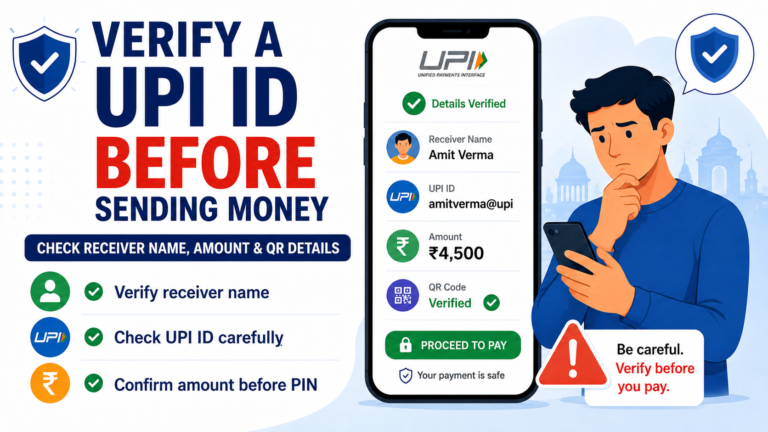
- check the receiver name shown by the UPI app;
- read the amount carefully;
- understand whether you are paying or receiving.
Never enter your UPI PIN because someone says it is necessary to “accept” a refund.
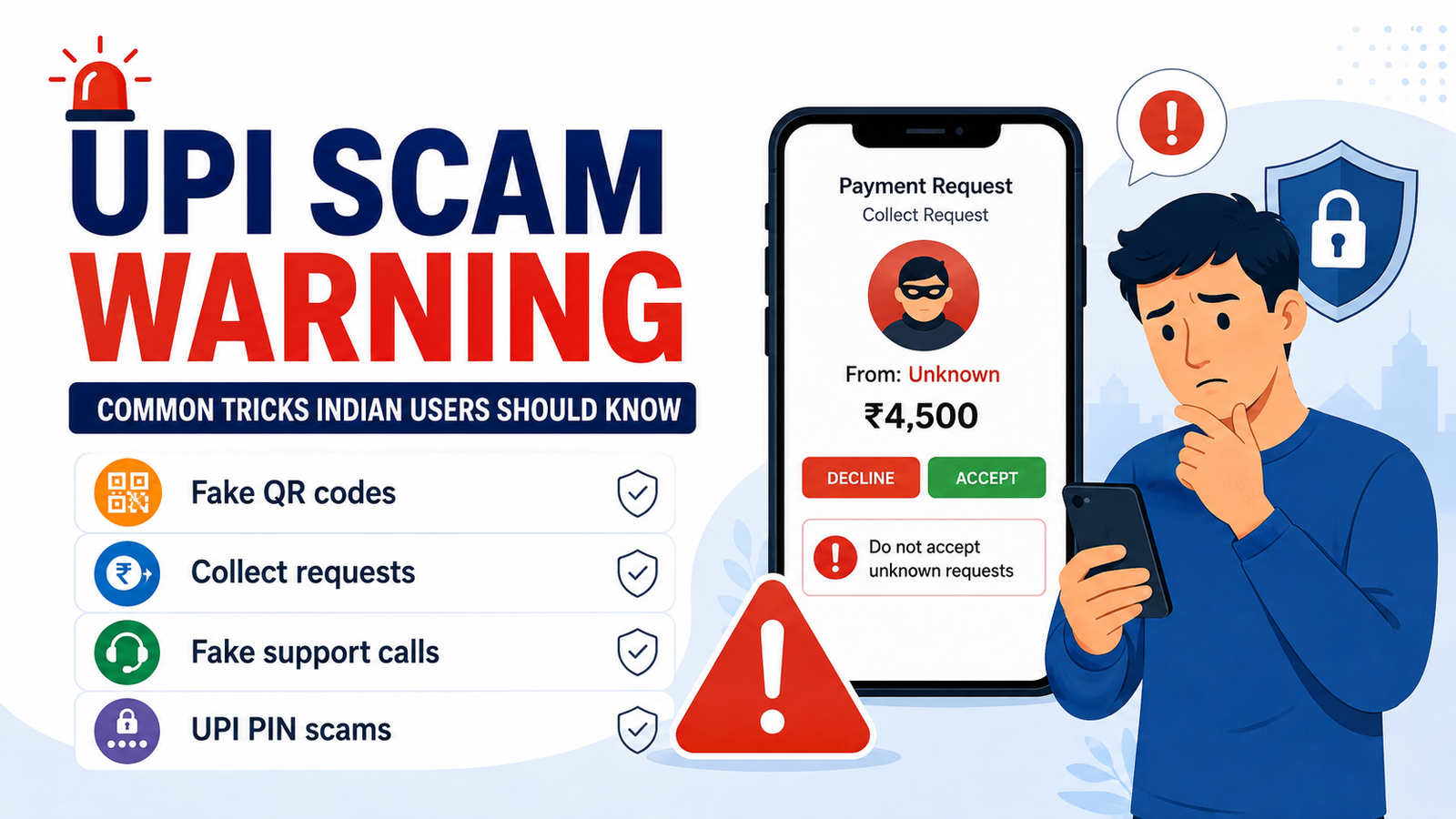
Scam 2: Fake Collect Requests
UPI supports requests for money, sometimes called collect requests.
A scammer may send a request and then tell you that approving it will allow you to receive money.
In reality, approving a payment request can result in money being sent from your account.
NPCI’s UPI awareness material advises users to accept money requests only from people they know.
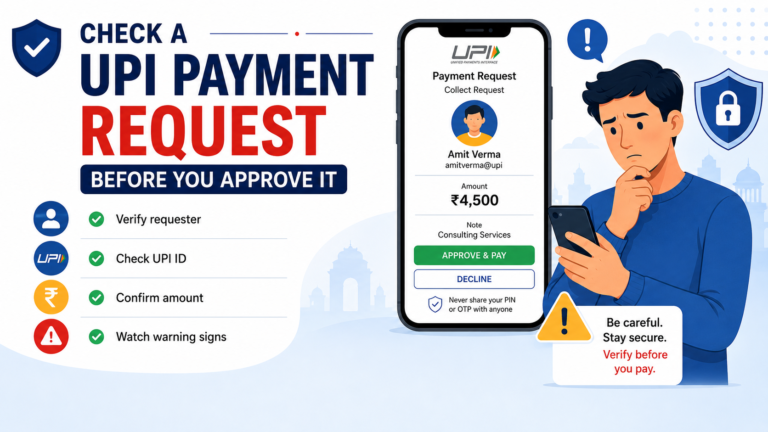
Before approving any request, check:
- the name of the requester;
- the UPI ID;
- the amount;
- the purpose of the request.
If you were expecting someone to send you money but instead receive a payment request, stop and confirm what is happening.
Scam 3: Fake Customer Support
A payment fails or remains pending, so you search online for customer support.
This is when another risk can appear.
Fraudsters sometimes publish fake customer-care numbers or pretend to represent banks and payment apps.
The person may ask you to:
- share your UPI PIN;
- share an OTP;
- provide card details;
- approve a collect request;
- scan a QR code;
- install a screen-sharing app.
Do not follow these instructions.
NPCI states that a bank’s customer support will never ask for your UPI PIN.
Use only customer-support information available through the official banking app, UPI app, bank website, or official documentation.
For a transaction that has failed or remains pending, you can also read our guide to UPI payments that fail or remain pending.
Scam 4: Screen-Sharing and Remote-Access Apps
A fake support agent may tell you that they need to “check your phone” to solve a payment problem.
They may ask you to install an unfamiliar application that allows them to see or control your screen.
This can expose sensitive information.
The Reserve Bank of India has warned users about fraud involving malicious or unfamiliar apps that can access important information stored on a device. RBI also advises users not to share critical details such as PINs, OTPs, or passwords.
Never install an application simply because an unknown caller tells you to do so.
If support is genuinely required, close the call and contact your bank independently using an official channel.
Scam 5: Fake Cashback, Rewards, and Refunds
Messages offering unexpected cashback or rewards can be tempting.
Examples may include:
- “You have won ₹5,000.”
- “Your UPI cashback expires today.”
- “Claim your refund immediately.”
- “Complete KYC to receive your reward.”
The message may contain a link or QR code.
NPCI lists fake cashback links among the fraud trends users should watch for.
Do not open suspicious links just because they appear to mention your bank or payment app.
Instead, open the official app yourself and check whether the offer actually exists.
Scam 6: Urgent Threat Messages
Some fraudsters use fear instead of rewards.
A message or caller may say:
- your bank account will be blocked;
- your UPI service will stop working;
- your KYC has expired;
- a police complaint has been filed;
- your SIM card will be disconnected;
- you must pay immediately.
The objective is to make you act before thinking.
NPCI includes threatening SMS or social-media messages among fraud patterns users should be cautious about.
Do not use the phone number or link included in a suspicious message.
Open the official bank application or visit the bank’s official website independently.
Scam 7: Fake Buyers and Sellers
Online marketplaces can also be used to create UPI scams.
A supposed buyer may claim that they are sending you money and ask you to:
- scan a QR code;
- approve a payment request;
- enter your UPI PIN;
- make a small “verification payment.”
Similarly, a fake seller may demand immediate payment before providing proper details about the product or service.
Before paying someone you do not know:
- confirm their identity;
- check the receiver name;
- verify the amount;
- avoid pressure to pay immediately;
- keep records of the conversation and transaction.
If you accidentally transfer money to an unintended recipient, read our guide on what to do after a UPI payment is sent to the wrong person.
Your UPI PIN Should Stay Private
Your UPI PIN is used to authorise transactions from your bank account.
NPCI states that users should not share their UPI PIN with anyone and that bank customer support will not ask for it.
The same cautious approach should be used for:
- OTPs;
- banking passwords;
- card PINs;
- complete card details;
- login credentials.
Do not share them through calls, messages, social media, or screen-sharing applications.
A person claiming to be a bank employee does not automatically make the request safe.
What Should You Do If You Suspect a UPI Scam?
If you receive a suspicious request but have not sent any money, stop the interaction.
Do not:
- enter your UPI PIN;
- approve the request;
- scan another QR code;
- install software;
- call an unofficial support number.
Block the suspicious account when appropriate and report it through the app.
If money has already been taken or you believe you have become a victim of financial cyber fraud, contact your bank immediately.
India’s National Cyber Crime Reporting Portal states that online financial fraud can be reported through the national cybercrime helpline 1930.
Save:
- transaction ID;
- UTR or reference number;
- screenshots;
- phone numbers;
- messages;
- website addresses;
- complaint numbers.
Do not delete evidence while the complaint is being investigated.
A Simple UPI Scam Warning Checklist
Before approving a UPI transaction, ask yourself:
- Do I know the person or business?
- Am I sending money or receiving money?
- Does the receiver’s name look correct?
- Is the amount correct?
- Why am I being asked for my UPI PIN?
- Did someone tell me to scan a QR code to receive money?
- Am I being pressured to act immediately?
- Did I find this support number through an unofficial search result or social-media post?
- Is someone asking me to install an unfamiliar app?
If something feels inconsistent, stop the transaction and verify it independently.
A few extra seconds are better than approving a payment you did not intend to make.
What to Remember About UPI Scams
Most UPI safety comes down to understanding exactly what you are approving.
Do not share your UPI PIN or OTP, do not approve unknown payment requests, and do not scan a QR code simply because someone promises that money will be credited to you.
Use official banking and payment-app support channels when you need help.
You can also read our guide to safe digital payment methods for Indian users for additional tips on protecting your online payments.
If you have already sent money to the wrong recipient, see our guide on what to do after sending a UPI payment to the wrong person.
Rupzio Guide provides simple educational information to help Indian users understand digital payments and make safer online decisions.