USDT Payment Safety: What Indian Users Should Check Before Sending
Sending USDT can take only a few moments.
But unlike many familiar payment methods, a mistake with the wallet address or blockchain network can be difficult to correct after the transfer is confirmed.
That is why USDT payment safety starts before you press Send.
If you are using USDT for the first time, you do not need to understand every technical detail about blockchain. But you should understand what you are sending, where it is going, and which network both sides support.
What Is USDT?
USDT is a stablecoin designed to follow the value of the US dollar.
People may use it to transfer digital value between wallets, exchanges, or supported online services.
But USDT is different from a normal bank transfer.
Instead of an account number and IFSC, you usually need to check a wallet address and blockchain network.
That makes one habit especially important:
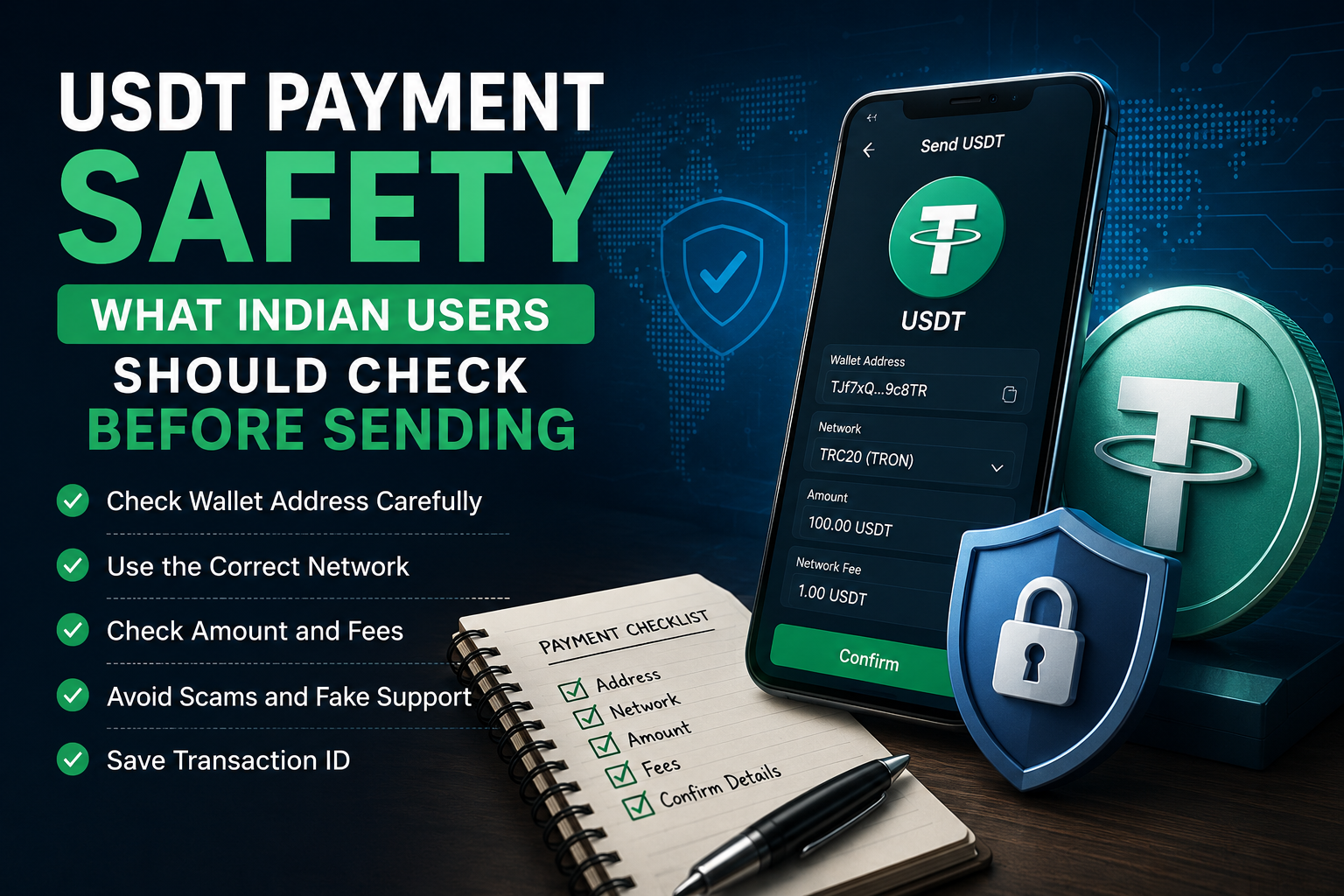
Do not confirm a USDT transfer until both the address and network are correct.
For a wider comparison of different payment options, our guide to UPI vs bank transfer vs crypto explains some of the main differences for Indian users.
The Network Matters as Much as the Wallet Address
USDT can exist on more than one blockchain.
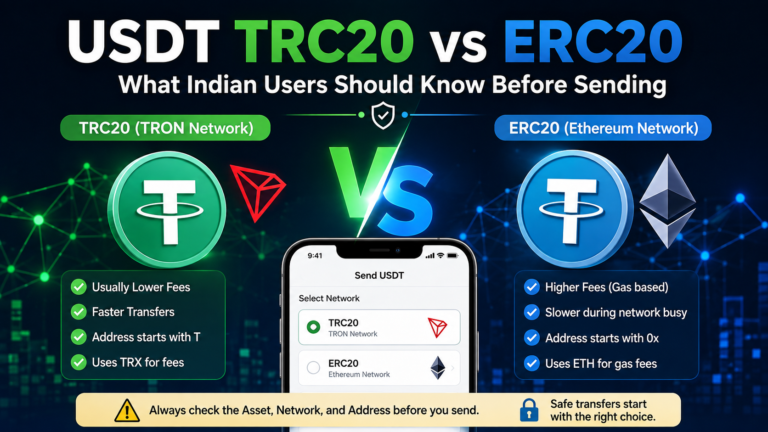
For example, USDT on the TRON network is commonly shown as TRC20, while USDT on Ethereum is commonly shown as ERC20.
These should not be treated as interchangeable simply because both display the name USDT.
Suppose a receiving platform tells you to deposit USDT using TRC20.
Do not choose another network simply because it appears cheaper, faster, or more familiar.
The sending side and receiving side must support the same network for that transfer.
If you are unsure, stop and check the receiving platform again before sending anything.
Check the Receiving Platform First
If you are sending USDT to an exchange, wallet, merchant, or online service, start from the receiving side.
Look at the deposit or payment instructions provided there.
Check:
- the asset is USDT;
- the selected blockchain network;
- the wallet address;
- any minimum deposit requirement;
- any additional instructions shown by the platform.
Do not depend only on an address that someone sends through Telegram, WhatsApp, email, or a social media message.
Whenever possible, open the official platform yourself and check the current payment details.
Check the Wallet Address Carefully
Crypto wallet addresses are long, so it is easy to assume that copy and paste makes mistakes impossible.
It does not.
After pasting an address, compare it with the address shown by the receiver.
Check several characters at the beginning and several characters at the end.
For an important transfer, you can compare more of the address as well.
Do not manually type a long wallet address unless there is a good reason to do so.
And if the address suddenly changes from one payment to another, verify why before continuing.
The same basic habit applies to traditional payments too. Our bank transfer safety guide explains why checking receiver details before sending money can prevent difficult mistakes.
Do Not Trust an Old Address Automatically
You may have sent USDT to the same person or platform before.
That does not mean you should automatically reuse an old wallet address without checking.
A platform may display new deposit information, support different networks, or change how deposits should be made.
Before every important transfer, open the receiving service and confirm the current details.
A saved address can be convenient, but convenience should not replace verification.
Consider a Small Test Transfer
If you are sending a large amount to a new wallet or service, a smaller test transfer can sometimes reduce the risk of making a larger mistake.
But check two things first:
Does the receiving platform have a minimum deposit amount?
Will the network fee make a small test transfer impractical?
If the platform allows it, send the test amount and wait until it appears correctly on the receiving side.
Only then consider sending the remaining amount.
A test transfer is not required for every payment, but it can be useful when the amount is significant or the destination is unfamiliar.
Check the Amount and Network Fee
Before confirming, look at the final amount carefully.
Some wallets or platforms may also show a network fee.
Do not assume the fee will always be the same.
Fees can depend on the blockchain, wallet, exchange, network conditions, and how the transaction is processed.
Check what will leave your wallet and what the receiver is expected to receive.
If the fee looks very different from what you expected, stop and understand it before confirming.
Our guide to safe digital payment methods for Indian users explains the same basic idea across UPI, bank transfers, cards, wallets, and crypto: understand the payment details before you approve them.
Do Not Send Because Someone Is Rushing You
Urgency is dangerous when combined with crypto payments.
A person may tell you:
“Send the USDT now or the address will expire.”
“Use this different network because it is faster.”
“Send another payment because the first one failed.”
“Transfer to this new wallet immediately.”
Some payment instructions can genuinely have time limits, but pressure should never stop you from checking the details.
If something changes unexpectedly, verify the request through a trusted channel.
Do not let a countdown, chat message, or impatient person make the decision for you.
Save the Transaction ID
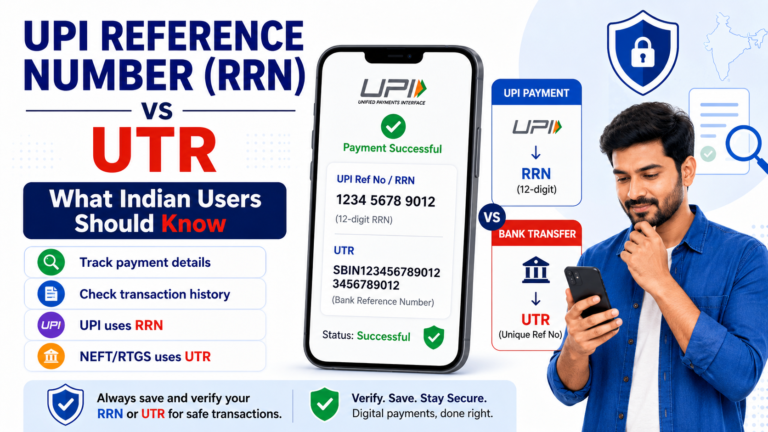
After a blockchain transfer is submitted, there is normally a transaction identifier that can be used to identify the transaction on the network.
Depending on the wallet or platform, you may see terms such as:
Transaction ID, TxID, or transaction hash.
Keep this information until the payment is complete.
It can help you check whether the transaction was broadcast, confirmed, or sent to the address you expected.
The transaction ID is useful for tracking.
It is not the same thing as your private key or recovery phrase.
Sent Does Not Always Mean Received Yet
You may press Send and immediately see the transaction inside your wallet.
The receiving platform may still need time to detect and confirm it.
Different services can wait for different numbers of blockchain confirmations before showing the deposit as available.
So if the receiver says the USDT has not appeared yet, do not immediately send the same amount again.
First check the transaction status and destination address.
If the transaction is still processing, give it time.
If it is confirmed on the blockchain but the receiving platform has not credited it, contact that platform through its official support channel and provide the transaction ID if requested.
Never Share Your Seed Phrase or Private Key
A wallet address is designed to be shared when someone needs to send crypto to you.
A private key or seed phrase is completely different.
Your seed phrase may be a set of recovery words used to restore access to a wallet.
Your private key gives control over the assets associated with that wallet.
Never send either one to:
- customer support;
- a merchant;
- someone helping you with a transaction;
- a stranger on Telegram or WhatsApp;
- a website asking to “verify” your wallet.
Someone does not need your seed phrase to send USDT to you or check a transaction.
If anyone asks for it, stop.
Be Careful With Fake Crypto Support
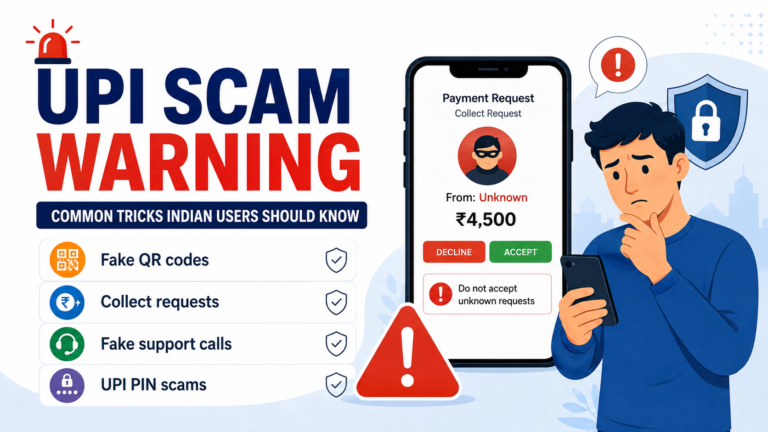
Crypto payment problems can attract scammers in the same way that UPI and banking problems do.
You may post a question online and quickly receive a private message from someone claiming to be:
“wallet support”
“exchange support”
“USDT recovery team”
“blockchain technical support”
They may ask you to connect your wallet to an unfamiliar website, share recovery words, or send another payment to recover the first one.
Do not trust a support account simply because it uses an official-looking logo.
Open the service’s official app or website yourself and find support from there.
Our guide on fake customer care numbers explains the same verification habit for other payment problems.
What If You Use the Wrong Network?
Do not immediately make another transfer.
First, save the transaction details and check exactly what happened.
Record the:
- USDT amount;
- sending network;
- receiving network you intended to use;
- destination address;
- transaction ID;
- sending wallet or platform.
Then contact the receiving wallet or platform through its official support channel.
Whether recovery is possible depends on the networks, address, platform, and circumstances.
Do not assume that every wrong-network transfer is permanently lost.
But do not assume it can always be recovered either.
The safest approach is still to prevent the mistake before sending.
What If You Send to the Wrong Address?
This can be more serious.
Blockchain transactions are not like editing a bank beneficiary before the transfer is complete.
After a valid transaction has been confirmed, there may be no central bank or payment operator that can simply reverse it for you.
If you know who controls the receiving address, you can contact them and ask whether they can return the funds.
If the address belongs to an exchange or other service, contact its official support team.
But recovery is not guaranteed.
This is why checking the destination before confirmation matters so much.
USDT, UPI and Bank Transfers Need the Same Basic Habit
The technology is different, but the safest habit is surprisingly similar:
Check before you send.
With UPI, you may check a UPI ID and receiver name.
With a bank transfer, you check the beneficiary and account number.
With USDT, you check the wallet address and blockchain network.
The details change.
The responsibility to verify them does not.
Before You Press Send
USDT can be convenient when both sides understand how the payment works.
But speed should not make the transaction careless.
Before confirming, make sure you understand:
- who you are paying;
- which USDT network is required;
- whether the wallet address is correct;
- how much USDT you are sending;
- what fee will apply;
- whether the receiving platform has special deposit instructions.
And keep one rule in mind:
Never share your seed phrase or private key to solve a payment problem.
A few extra seconds of checking the address and network can prevent a mistake that may be much harder to correct after the USDT has already been sent.