Bank Transfer Safety: What Indian Users Should Check Before Sending Money
Sending money to a bank account can feel straightforward.
You enter the beneficiary details, choose the amount, confirm the transfer, and wait for the payment to arrive.
But one incorrect digit or one suspicious message can turn a simple transfer into a difficult problem.
That is why bank transfer safety begins before you press Send.
Whether you are using NEFT, IMPS, RTGS or another option offered by your bank, take a few moments to check who you are paying and whether the details make sense.
Check the Account Number Carefully
The account number is one of the most important details in a bank transfer.
Do not read only the first few or last few digits.
Compare the full account number with the details provided by the receiver.
If you copied the number from a message, check that no digit was missed, added or changed.
This matters especially when you are adding a new beneficiary.
For NEFT, the account number is especially important. Check every digit carefully because the payment is credited using the account number you provide.
A familiar beneficiary name should not make you ignore the account number.
Check the IFSC Before Sending
If the transfer requires an IFSC, check that as well.
An IFSC identifies the bank branch used for routing the transfer.
Do not guess it.
If someone sends you an account number and IFSC through WhatsApp, Telegram, email or another message, compare the details carefully before saving the beneficiary.
This is especially important when someone suddenly says:
“We changed our bank account.”
“Use this new account from today.”
“The old bank details no longer work.”
A genuine change can happen, but unexpected payment-detail changes should always be verified independently.
Confirm Who You Are Paying
Ask yourself a simple question:
Do I know why I am sending money to this account?
You may be paying:
- a person you know;
- a business;
- an online service;
- a seller;
- a contractor;
- a company invoice.
The name on a message or invoice is not enough by itself.
If your banking app displays beneficiary information, compare it with what you expected.
If the details look different, stop before continuing.
Do not allow someone to rush you by saying the payment must be completed “within five minutes” or the offer will disappear.
Pressure is a reason to check more carefully, not less.
Be Careful When Bank Details Suddenly Change
Suppose you have paid the same business several times.
One day you receive a message saying:
“Our bank account has changed. Send the next payment here.”
Do not automatically use the new details.
Contact the person or business through a contact method you already trust.
Do not verify the change by replying only to the same message that gave you the new account details.
If an email account or messaging account has been compromised, the person sending the false details may also control the conversation.
Independent verification can prevent a payment from going to the wrong account.
Check the Amount Before You Confirm
Account details are not the only place where mistakes happen.
Check the amount as well.
₹5,000 and ₹50,000 look very different when written clearly, but typing an extra zero can happen quickly.
Before confirming:
- read the amount again;
- check the number of zeros;
- confirm the currency;
- compare the amount with the invoice or agreement;
- make sure you are not paying twice.
For a large or unfamiliar payment, slowing down for a few seconds is worthwhile.
Do Not Make a Second Transfer Too Quickly
Someone may contact you immediately after payment and say:
“I did not receive it. Please send again.”
Do not automatically make another transfer.
Open your banking app or account statement and check the first transaction.
Look for its current status and transaction reference.
A delay does not always mean the payment failed.
Sending again without checking can create a duplicate payment.
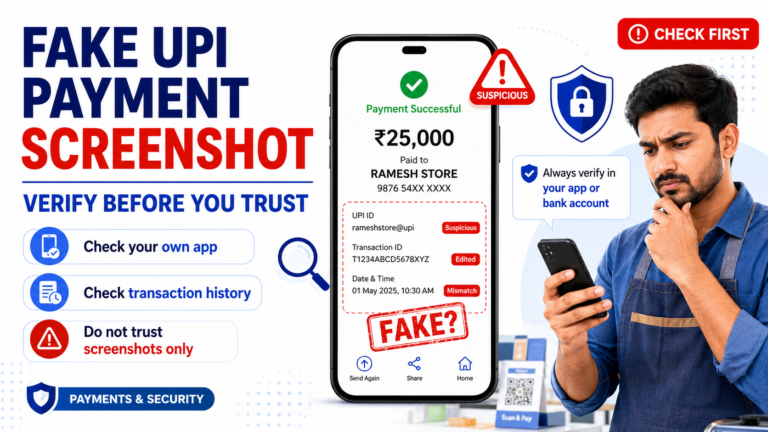
If the receiver sends you a screenshot claiming that the payment failed, do not use their screenshot as your only evidence.
Check your own bank account.
Keep the Transaction Reference
After sending money, keep the transaction details until you are sure everything is complete.
Useful information may include:
- transaction date and time;
- amount;
- beneficiary name;
- account details;
- transfer method;
- transaction reference or UTR;
- screenshot or receipt from your own bank.
A UTR or transaction reference can help your bank identify a transfer if you later need support.
Do not post a full banking receipt publicly.
It may contain information that should stay private.
Bank Transfer and UPI Need the Same Basic Habit
Bank transfers and UPI work differently, but one safety habit applies to both:
Check the receiver before sending money.
With UPI, you may check a UPI ID, displayed receiver name or QR code.
With a bank transfer, you may need to check an account number, beneficiary details and IFSC.
The details are different, but the principle is the same.
If you want a broader comparison, our guide to UPI vs bank transfer vs crypto explains how these payment methods differ in speed, convenience and everyday use.
Do Not Transfer Money Because a Stranger Calls You
A phone call can make a payment request sound more convincing than it really is.
Someone may claim to be from:
- your bank;
- customer support;
- a delivery company;
- an online merchant;
- a government office;
- an investment service.
They may tell you to transfer money to a “safe account”, “verification account” or “temporary account.”
Do not send money simply because the caller sounds professional.
End the call and contact the organisation using a channel you already know is genuine.
Our guide on fake customer care numbers explains why an official-looking support number should still be verified before you trust it.
Never Share Banking Security Details
A bank transfer problem does not require you to give a stranger access to your banking account.
Keep information such as your:
- OTP;
- ATM PIN;
- card CVV;
- internet banking password;
- mobile banking password;
- other private security credentials
to yourself.
Be careful if someone asks you to install a remote-access or screen-sharing application while you are logged into your bank.
Do not allow another person to guide you through a transfer that you do not understand.
What If You Send Money to the Wrong Account?
Act quickly.
First, save the transaction details.
Then contact your bank through its official app, website, phone number or branch and explain what happened.
Provide the account details, amount, date and transaction reference when requested.
Do not assume that a successful transfer can simply be cancelled with one tap.
The available recovery process may depend on the transfer and the circumstances.
If you have made a similar mistake through UPI, our guide on UPI payments sent to the wrong person explains the steps users can take after an incorrect payment.
Most importantly, be cautious about anyone who later promises to recover the money in exchange for another payment.
Wrong Account or Scam? Know the Difference
Sometimes a transfer goes to the wrong account because of a genuine mistake.
That is different from being tricked into sending money.
A scam may involve someone:
- pretending to be customer support;
- sending fake bank details;
- creating a false invoice;
- impersonating someone you know;
- promising a refund;
- pressuring you to send money urgently;
- asking you to move money to a “safe” account.
If you were deliberately misled into making the transfer, treat the situation as possible fraud and contact your bank quickly through an official channel.
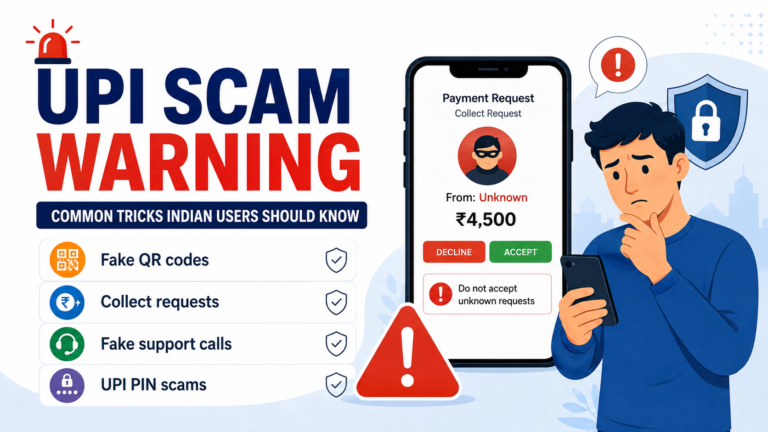
Our UPI scam warning guide also covers several payment tricks that can appear outside normal UPI payments.
Keep Payment Conversations and Records
For business payments or transactions with someone you do not know well, keep useful records.
These may include:
- invoice;
- order details;
- payment instructions;
- messages confirming bank details;
- transaction receipt;
- complaint number if something goes wrong.
Good records can make it easier to explain what happened later.
But do not keep sensitive passwords or security codes inside screenshots or messages.
Payment records and banking credentials are not the same thing.
When a Bank Transfer Makes More Sense Than UPI
There is no need to treat bank transfers and UPI as competitors.
They can be useful for different situations.
UPI is convenient for many everyday payments.
A bank transfer may be preferred when you are sending directly to an account, using formal beneficiary details, or keeping a clear banking record for a larger or more structured payment.
The important question is not simply:
Which method is faster?
A better question is:
Which method do I understand, and have I checked the receiver details properly?
Our guide to safe digital payment methods for Indian users provides a broader overview of choosing and checking different payment options.
Check the Details Before the Money Leaves Your Account
A bank transfer may take only a few moments to confirm, but correcting a mistake can take much longer.
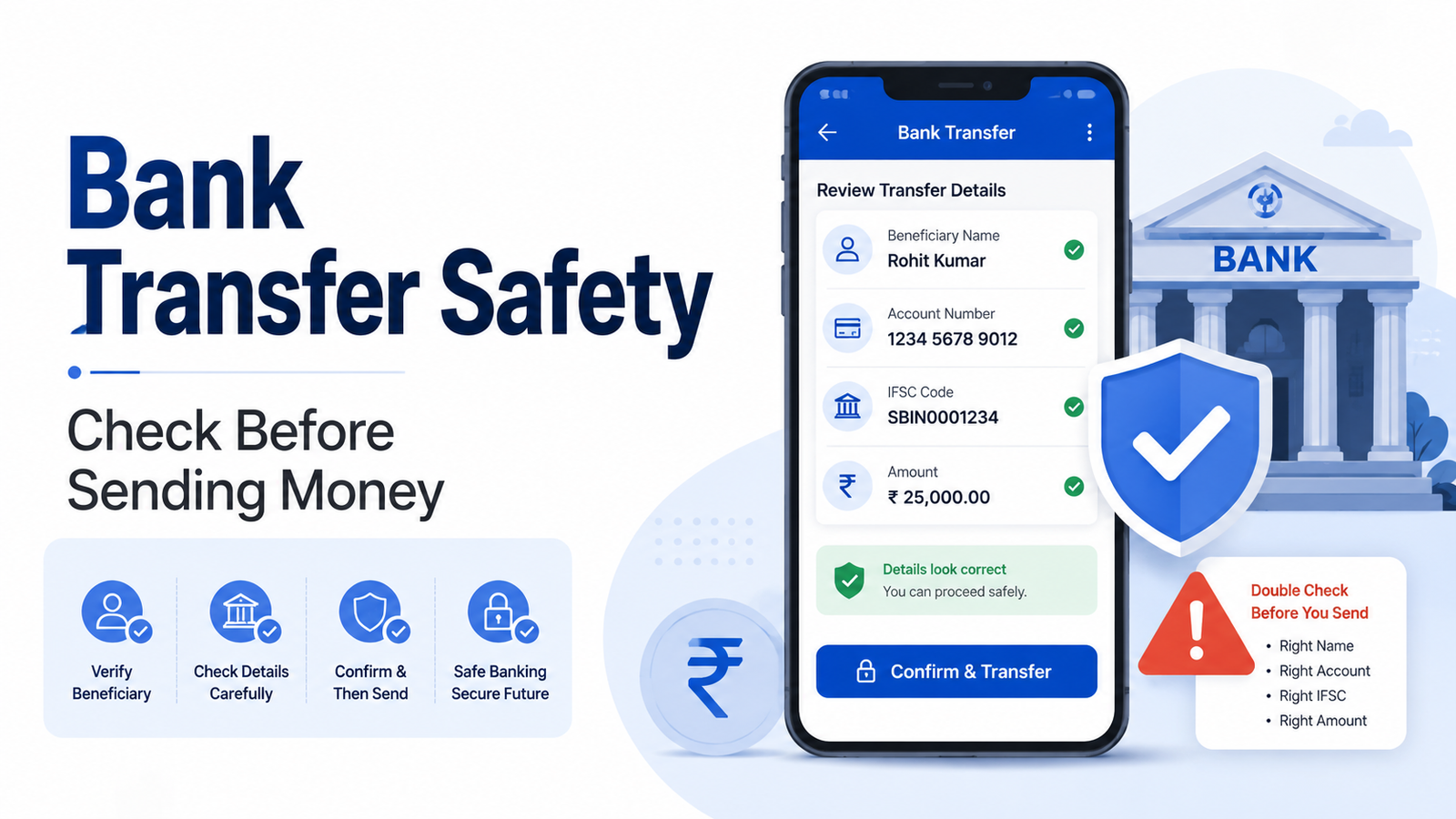
Before sending money, check:
- the beneficiary;
- the full account number;
- the IFSC when required;
- the transfer amount;
- the reason for payment;
- any unexpected change in bank details.
And ask yourself one final question:
Am I sending this payment because I understand it, or because someone is rushing me?
If everything matches, you can make a more informed decision.
If something looks wrong, stop.
The best time to catch a bank transfer mistake is before the money leaves your account.